
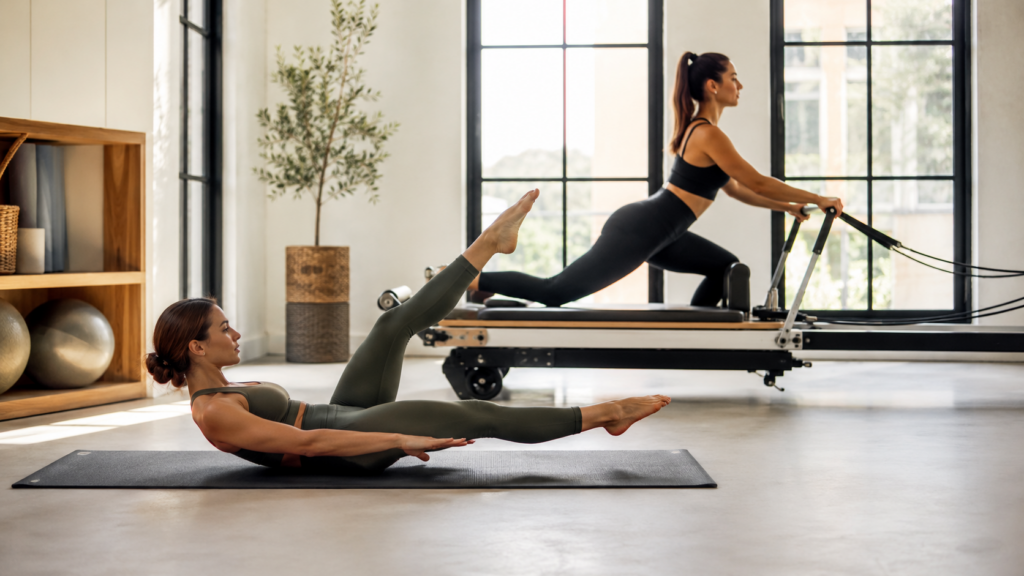
If you have been thinking about trying Pilates, you have probably heard people talk about mat Pilates and reformer Pilates. These are the two most familiar types, but they are not the whole story.
Pilates can be practised in different ways, depending on the equipment used, the teaching style and the reason someone is taking part.
What Is Mat Pilates?
Mat Pilates is performed on an exercise mat, using your own body weight for resistance. Classes may also include small pieces of equipment such as resistance bands, Pilates rings, soft balls or light weights.
It is one of the easiest types of Pilates to access because it does not require a large machine or specialist studio. You can take part in a class, follow an online session or practise at home.
Although mat Pilates can look gentle, it can be surprisingly challenging. The exercises focus on controlled movement, posture, balance, flexibility and core strength.
What Is Reformer Pilates?
Reformer Pilates uses a specialist machine with a sliding platform, springs, straps and bars. The resistance can be adjusted, allowing the instructor to make exercises more supportive or more demanding.
This makes reformer Pilates suitable for a wide range of people. Beginners may appreciate the additional support, while more experienced participants can use the springs to create a challenging full-body workout.
Reformer classes are usually held in smaller groups because each person needs their own machine.
Are There Other Types of Pilates?
Yes. Mat and reformer describe the two most common ways Pilates is practised, but there are several other styles.
Classical Pilates follows the original exercises and sequences developed by Joseph Pilates. Contemporary Pilates adapts these principles using modern knowledge of movement, fitness and physiotherapy.
Clinical Pilates is generally designed for people recovering from injury or managing pain or mobility difficulties. It is often taught by a physiotherapist or another suitably qualified professional.
Some specialist studios also offer equipment Pilates using the Cadillac, tower, Pilates chair or barrel. You may also find fusion classes combining Pilates with yoga, dance, cardio or strength training.
Is Mat or Reformer Pilates Better?
Neither type is automatically better. The right choice depends on your goals, fitness level, budget and what you enjoy.
Mat Pilates may suit you if you want an affordable and flexible class that can also be practised at home. Reformer Pilates may appeal if you prefer equipment-based exercise, smaller classes or adjustable resistance.
Whichever type you choose, look for a qualified instructor who explains the exercises clearly and offers suitable alternatives when needed. The best Pilates class is one that feels comfortable, enjoyable and realistic for you to continue.
Year-Round Classes Providers
‘What’s On Now’